Tim Fanning
The Passage (Justin Cronin Edition)Tim Fanning is a scientist from Columbia who joins Jonas Lear’s expedition into Bolivia, where a bat attack kills members of the team and leaves Fanning gravely ill. His apparent improvement shortly before the survivors press on to the expedition’s target makes him a rare, uncertain sign of hope amid the catastrophe.
Identity and Introduction
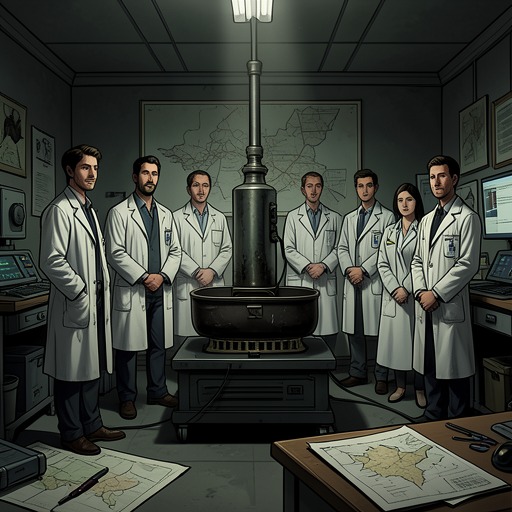
Fanning catches up with Lear’s group in La Paz, joining an expedition assembled to investigate a mystery connected with death. He brings six graduate assistants, substantially enlarging the team and lowering its average age. Lear presents him as an eminent scientist, while privately noting his three successive marriages; the mixture of professional reputation and informal, wry observation introduces Fanning through Lear’s personal correspondence rather than an independent account of his character.
The Expedition’s Militarization
The expedition’s military support becomes more conspicuous as preparations conclude. Fanning is angered by the rank he receives: he is made a captain, while Lear is told he is now a major. The rank assignment offers a glimpse of how the researchers are being absorbed into a military operation, even as Lear treats the titles as bewildering and Claudia Swenson objects to the expedition’s transformation into an army.
The Bat Attack and Illness
Two nights after the expedition is attacked by bats, Lear reports that four people have died, including Swenson, and that six others have been bitten or scratched and become ill. Fanning is among the injured: he tries to pull the bats away from Swenson and suffers severe injuries to his hands. Lear judges him the sickest of the survivors and doubts that he will live until morning. The account places Fanning’s scientific expedition abruptly within a struggle for survival, where the team’s knowledge has not yet supplied an explanation or remedy.
Uncertain Recovery
After the survivors radio for evacuation, those still healthy decide to use the remaining daylight to continue toward the site they had come to investigate. Lear reports that Fanning has unexpectedly begun to improve: his fever has fallen, the bleeding has stopped, and his skin looks better, although he remains unresponsive. The improvement is not presented as a full recovery; Lear still describes the other patients’ prospects as uncertain, and the expedition’s fate remains unresolved in the available account. Fanning’s condition thus marks a reversal within the disaster, but not a resolution.